PEEK Precision Machined Parts
and High-Performance Plastic Components
Engineered for high temperature, extreme pressure, severe corrosion, and critical electrical insulation. Explore our precision CNC machining parts engineered to meet mission-critical requirements.
- ±0.01 mm Precision Tolerances
- Continuous Temp Resistance 250°C+
- Prototyping to High-Volume Production
Supported Processing: CNC Turning & Milling / Complex Plastic Machining / Engineering Verification
Engineered for Extremes: The Value of PEEK Precision Components
Advanced PEEK material advantages allow industrial components to replace traditional metal parts, achieving massive weight reduction, total chemical immunity, and superior thermal isolation in harsh operating conditions. We integrate precision CNC machining parts to complement high-performance PEEK components in complex assemblies.
Thermal & Chemical Stability
Sustains continuous operation near 250°C (482°F) and resists aggressive acids, alkalis, and organic solvents.
Dimensional Stability & Wear Resistance
Maintains tight, high-precision machined tolerances under high-frequency motion and long-term cyclic loading.
Dielectric Strength & Low Conductivity
Delivers excellent electrical insulation and thermal isolation barriers for sensitive electronic assemblies.
Lightweight Metal Replacement
Reduces component weight significantly compared to steel or aluminum parts while matching structural integrity requirements.
The ZSCNC engineering team is available to analyze your equipment operating conditions to recommend the optimal PEEK grade and design optimization strategies for your high-temperature plastic parts. We also benchmark performance against stainless steel parts when thermal shock or structural comparisons are needed.
PEEK CNC Machining Capabilities & Technical Specifications
Machining Modalities & Component Scope
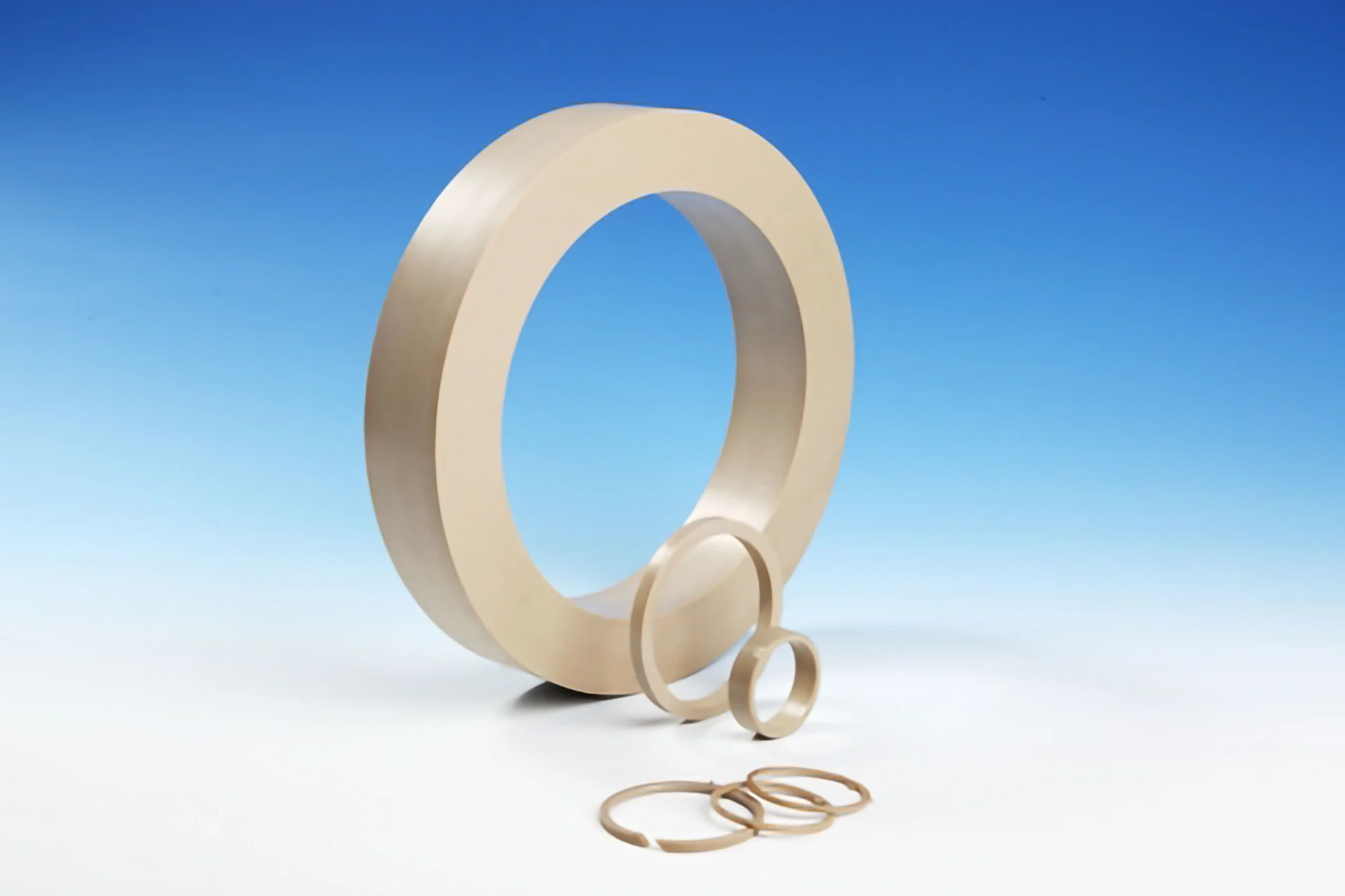
ZSCNC delivers specialized peek cnc machining services utilizing multi-axis CNC milling, precision CNC turning, live-tool turn-milling, micro-drilling, and surface grinding to supply high-performance CNC machining parts. We produce high-performance custom peek components designed to withstand harsh operating conditions, including high-pressure valve seats, complex electrical insulation gaskets, low-friction wear rings, guide bushes, and dimensionally stable structural housings.
Dimensional Envelope & Precision Tolerances
- Processing Envelopes: Accommodating outer diameters up to 300 mm, machining lengths up to 500 mm, and cross-sectional thicknesses up to 50 mm. Custom oversized engineering requests are reviewed by our technical team.
- Precision Plastic Tolerance: Standard production runs consistently achieve tight engineering tolerances from ±0.01 mm to ±0.02 mm. Specialized thermal-stabilization setups enable ultra-critical mating surfaces with even tighter dimensional control, and we maintain these tolerances for our aluminum parts as well.
Production Scalability & Lead Times
- Seamless operational scaling from rapid functional prototypes and low-volume pilot runs to high-volume, continuous supply chain manufacturing.
- Flexible lead time scheduling engineered to align with tight product verification phases, technical field trials, and scalable industrial procurement demands.
Surface Finishes & Secondary Operations
Comprehensive post-machining treatments include precision edge deburring, medical-grade surface polishing, permanent laser engraving, part serialization, and multi-stage ultrasonic cleaning to satisfy rigorous cleanliness and component traceability protocols.
At ZSCNC, we have developed mature process controls specifically for high-performance polymers, ensuring stress-relieved machining that prevents the dimensional warping common in standard machine shops. Learn more on our about us page.
Industrial Applications & Proven Environments for PEEK Machined Parts
Where standard metals and engineering plastics fail under harsh operating conditions, precision PEEK components ensure uninterrupted performance across high-stress industrial applications. Learn more about our industries expertise.
Chemical & Fluid Handling Equipment
Key Components:
- Precision valve seats
- Mechanical seal faces
- Back-up rings
- Flow meter rotors
Environment:
Corrosive chemical streams, high-pressure superheated steam, and aggressive industrial solvents
Electrical & Electronic Hardware
Key Components:
- Semiconductor test sockets
- Wafer carriers
- High-voltage insulating spacers
- Flame-retardant connectors
Environment:
High-voltage environments, deep vacuum chambers, and strict flame-retardant (UL 94 V-0) compliance zones. These demands mirror our CNC machining parts precision standards.
Medical & Analytical Laboratory Devices
Key Components:
- Diagnostic equipment manifolds
- Non-invasive fluidic connectors
- Scientific instrument fixtures
Environment:
Repeated autoclave sterilization cycles and intensive chemical washdowns using aggressive disinfectants
Mechanical & Industrial Transmission
Key Components:
- High-speed wear strips
- Bearing cages
- Custom bushings and bearings
- Thrust washers
Environment:
Friction-heavy assemblies, unlubricated dry-running systems, and high structural loads requiring absolute dimensional stability. We also build complementary stainless steel parts for hybrid load-bearing assemblies.
ZSCNC's cross-industry project experience helps shorten your design validation cycle by providing historical data on material behavior in similar fields.
Don't see your specific industry listed? Speak with our applications engineers to evaluate suitability.
PEEK vs. Metals & Standard Plastics: Engineering Material Selection Guide
Selecting the ideal substrate for high-performance components requires balancing mechanical stress, thermal limits, and total lifecycle costs. While premium engineering polymers demand a higher upfront investment compared to traditional materials, the long-term material advantages of PEEK in harsh operating conditions significantly mitigate unexpected downtime, outlasting both standard industrial metals and commodity thermoplastics.
Engineers should specify PEEK CNC machined parts when continuous operating temperatures exceed 120°C, absolute chemical resistance is non-negotiable, electrical isolation is essential, or critical weight reduction improves system efficiency. Traditional metals like Aluminum 6061 parts and Stainless Steel 316 parts remain industry standards for extreme structural loads or thermally mild environments where initial raw material cost dictates the budget. For standard applications with moderate wear and regular moisture exposure, POM-C offers an economical alternative without the over-engineered performance of advanced polymers.
| Evaluation Criteria | PEEK (Polyetheretherketone) | Aluminum 6061 | Stainless Steel 316 | POM-C (Polyacetal) |
|---|---|---|---|---|
| Temperature Resistance | Excellent Continuous operation up to 250°C | Moderate Mechanical loss above 100°C | High Structural integrity up to 400°C | Low Thermal degradation above 80°C |
| Corrosion Resistance | Excellent Immune to organic solvents, acids, and alkalis | Low Prone to oxidation and chemical pitting | High Excellent resistance except in heavy chlorides | Moderate Degrades under strong acids or oxidizing agents |
| Electrical Insulation | Excellent High dielectric strength; non-conductive | Low High electrical conductivity | Low High electrical conductivity | Good Stable dielectric properties for general use |
| Component Weight | Low Lightweight polymer (approx. 1.3 g/cm³) | Moderate Lightweight metal (approx. 2.7 g/cm³) | High Heavy structural metal (approx. 8.0 g/cm³) | Low Standard polymer weight (approx. 1.4 g/cm³) |
| Relative Cost | High Premium raw material and specialized CNC tooling | Moderate Cost-effective raw stock and rapid machining | High Moderate material cost with intensive machine labor | Low Highly economical standard engineering plastic |
Need an expert material recommendation? Send your application parameters to our engineering desk for a comprehensive technical review.
We assist you in finding the precise equilibrium between cost and performance, ensuring ZSCNC projects optimize your component lifespan without inflating production budgets.
From Engineering Blueprints to Scaled PEEK Production
- 1
Design Review & Operating Context
Analyzing your drawings against extreme application temperatures, chemical exposure, and mechanical loads.
- 2
Material Grade Selection & DFM
Recommending the optimal PEEK grade and tailoring part geometry for efficient, low-stress CNC machining parts production.
- 3
Commercial Quoting & Scheduling
Providing transparent cost breakdowns for both fast-turnaround prototypes and scaled serial production.
- 4
Prototyping & First-Article Inspection
Machining initial evaluation samples to verify dimensions, fitment, and complex operational requirements.
- 5
Serial Production & Supply Chain Delivery
Executing full-scale manufacturing runs backed by strict batch traceability and rigorous quality controls for precision machined parts.
Have an urgent requirement? Standard prototyping phases can be accelerated based on drawing maturity.
A dedicated ZSCNC project manager oversees your order from initial DFM analysis through final delivery, ensuring seamless engineering communication and supporting fully custom programs that align with our about us engineering approach.
Uncompromising Quality: PEEK Material Integrity & Precision Inspection
Certified Material Provenance & Full Traceability
ZSCNC eliminates risk in high-spec applications by enforcing complete material traceability. We source premium, verified raw PEEK resin and stock shapes exclusively from global industry leaders such as Victrex. Every batch of engineering plastic is backed by comprehensive Material Test Reports (MTR) and raw batch tracking numbers, ensuring you never receive counterfeit, blended, or sub-grade polymers. This transparency reflects the trust detailed in our About Us foundation.
Polymer-Specific Process Control
Machining high-performance polyetheretherketone requires specialized technical mastery to prevent internal stresses and structural deformation. Our internal protocols regulate exact thermal management, utilizing custom cutting-tool geometries, high-performance cooling fluids, and proprietary post-machining stress-relief annealing cycles. This dedicated plastic CNC machining approach ensures complete dimensional stability for finished CNC machining parts. The same rigidity benefits high-cycle automatic packaging machines that rely on precise polymer components.
Advanced Metrology & Inspection Safeguards
To fulfill tight tolerance demands up to ±0.01 mm, our quality assurance division follows a rigorous multi-stage routing checklist. Every production run undergoes initial setup validation, routine in-process operator measurements, and final quality control testing. Our facility utilizes calibrated Coordinate Measuring Machines (CMM), digital micrometer calipers, and high-magnification optical profile projectors to verify every critical dimension.
- Material Test Reports (MTR) & Certificates of Analysis (COA)
- Dimensional Inspection Sheets & CMM Data Logs
- Certificate of Conformance (CoC) For Every Shipment
ZSCNC operates under strict quality management systems, ensuring that every batch of machined PEEK components conforms precisely to your technical specifications and critical aerospace, medical, or semiconductor industry standards.
Proven Performance: PEEK Machining Success Stories
Chemical Processing Equipment Component
- Application:
- High-temperature corrosive media control valve.
- Challenge:
- Original alloy components suffered rapid galvanic corrosion, causing frequent unscheduled factory shutdowns and driving the need for more reliable CNC machining parts.
- Solution:
- Replaced critical internal wear parts with custom-machined ZSCNC PEEK components, optimizing sealing tolerances and drawing on our broader experience in stainless steel parts for harsh environments.
- Result:
- Component operating lifespan extended by multiple cycles, drastically lowering long-term maintenance overhead.
Industrial Electrical Assembly Insulator
- Application:
- High-voltage, high-temperature structural insulation block.
- Challenge:
- Baseline commercial plastics suffered localized thermal deformation, leading to critical dielectric breakdown.
- Solution:
- Transitioned to precision-milled glass-fiber reinforced PEEK, modified with enhanced internal structural ribbing and leveraging our advanced titanium parts expertise for high-performance assemblies.
- Result:
- Maintained perfect dimensional stability and electrical isolation throughout continuous peak thermal cycles.
Detailed operational data and expanded case files can be provided during your technical consultation.
Technical FAQ: Machining & Deploying PEEK Parts
Unfilled PEEK machined parts offer an exceptional continuous working temperature of approximately 250°C (482°F). For short-term exposures or low-load applications, it can perform reliably up to 310°C (590°F). Our in-house technical support team provides specific temperature, chemical compatibility, and life-cycle projections tailored directly to your operational data, determining if glass or carbon fiber reinforcements are required to maintain structural modulus at peak thermal limits.
Custom CNC lead times are highly dependent on component geometry, tolerance constraints, and total order volume. For broader capability details, explore our CNC machining parts resources that mirror these production schedules. Prototyping and first-article engineering samples are typically completed within 3 to 7 business days following final drawing approval. Full production volumes scale accordingly, and the ZSCNC engineering team establishes firm, guaranteed delivery timelines during the initial quotation phase to align with your project schedule.
PEEK is a premium, high-performance thermoplastic requiring complex chemical synthesis, making raw stock costs substantially higher than our aluminum parts or stainless-steel parts. However, when evaluating Total Cost of Ownership (TCO), high temperature plastic questions center on long-term survival. PEEK's extreme corrosion immunity, self-lubricating properties, and massive weight reduction significantly minimize system downtime and maintenance cycles, delivering a vastly superior return on investment over time.
While exceptionally resilient across most industrial fluids, PEEK exhibits vulnerability to certain highly aggressive chemicals, including concentrated sulfuric acid, nitric acid, hydrofluoric acid, chlorine, and bromine at elevated temperatures. If your operating environment involves these specific chemical agents, our materials engineering desk can help evaluate alternative high-performance fluoropolymers or modified polymer blends.
Yes. We routinely manufacture proprietary components and specialized peek faq items for highly competitive aerospace, semiconductor, and medical instrumentation fields. Your intellectual property, CAD schematics, and engineering models are protected within secure local networks. We are fully prepared to execute standard corporate or client-provided NDAs before you submit drawings for technical appraisal.
Still have an unanswered technical question? Ask our engineering desk directly.
Ready to Optimize Your Critical Components? Request a PEEK Quote Now
Partner with precision. Upload your CAD drawings today for a comprehensive manufacturability review, transparent custom peek parts pricing, and dependable production timelines. Whether you need intricate CNC machining parts or lightweight aluminum parts, we deliver consistent quality.
Accepted Formats: STEP, IGES, DXF, DWG, PDF. All data is fully protected under strict confidentiality protocols.
ZSCNC guarantees a fast, professional engineering response and peek parts quote feedback within 24 business hours of receiving your files. Learn more about our approach on our about us page.